

The Cambodia-Asia Polytechnic Institute (CAPI)
is a private higher education institution established in 2017 and officially registered with the Ministry of Labour and Vocational Training. CAPI is formally accredited under the Royal Government’s Sub-Decree No. 1212 អនក្រ.តត, issued on October 27, 2017. The institute is located in Phnom Svay Village, Boeng Kanseng Commune, Banlung City, Ratanakiri Province, Cambodia. Since its establishment, CAPI has grown into a vibrant center for academic excellence, practical skills training, and community engagement, playing a vital role in developing skilled human resources in the northeastern region of Cambodia.
To meet the diverse educational and career needs of students, CAPI offers a wide range of degree programs through its four main faculties:

-
Faculty of Business Administration – focusing on management, accounting, finance, and entrepreneurship to prepare graduates for leadership roles in both the private and public sectors.
-
Faculty of Information Technology – equipping students with skills in programming, networking, and emerging technologies to meet the demands of the digital economy.
-
Faculty of Agriculture – promoting climate-smart agriculture, agribusiness, and sustainable farming practices to support rural development and food security.
-
Faculty of English Foreign Language – enhancing students’ language proficiency and communication skills to excel in academic, professional, and international environments.
In addition to its role as a higher education institution, CAPI also operates as a non-profit organization, actively raising funds from diverse funding agencies such as government line agencies, the U.S. Embassy, and the European Union. Through these partnerships, CAPI provides essential opportunities for vulnerable and marginalized youth, particularly indigenous youth, to access training programs that develop both hard and soft skills. These initiatives empower young people to improve their employability, become self-reliant, and actively contribute to their communities’ sustainable development.
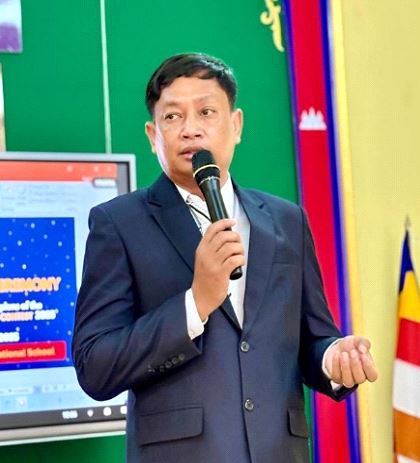
Director’s Message
At Cambodia-Asia Polytechnic Institute (CAPI), we believe that education is the foundation of empowerment, the engine of innovation, and the most powerful tool for building a sustainable and prosperous society. Since our establishment in Ratanakiri province, one of Cambodia’s most culturally rich and naturally diverse regions, we have been deeply committed to serving the local community—particularly indigenous youth—by providing access to quality higher education and practical skills development.
From the very beginning, CAPI was founded with a clear vision: to create opportunities for young people in Ratanakiri and beyond, equipping them with the knowledge, skills, and confidence to succeed in their chosen careers while fostering a sense of responsibility to their communities and the environment. Our programs are designed to go beyond the classroom, offering hands-on learning experiences that prepare students to meet the challenges of professional life and become active contributors to sustainable development.
Our journey has been one of growth, resilience, and aspiration. Over the years, we have proudly celebrated the achievements of many graduating cohorts who have stepped confidently into the job market, making meaningful contributions across diverse sectors—government, private enterprises, non-governmental organizations, and local community initiatives. These successes are a testament to our shared commitment to excellence and the dedication of our faculty and staff.
CAPI also serves as a hub for collaboration and innovation. We actively partner with businesses, local authorities, civil society organizations, and educational institutions both in Cambodia and internationally. Through these partnerships, our students gain exposure to real-world opportunities and global perspectives. These efforts have positioned CAPI as a trusted and dynamic contributor to higher education and workforce development, particularly in underserved and rural areas like Ratanakiri.
As we look to the future, our mission remains clear: to empower young people, especially indigenous youth, with the tools they need to thrive, while contributing to the social and economic growth of Ratanakiri province and Cambodia as a whole. I extend my heartfelt gratitude to our students, alumni, partners, and stakeholders for your continued trust and support. Together, we will keep expanding opportunities, enhancing our programs, and shaping a future where education drives progress, equity, and lasting impact.
Dr. Sam Bunthorn
Director, Cambodia-Asia Polytechnic Institute
Vision
To empower Cambodia’s next generation—especially indigenous communities in Ratanakiri—through accessible, high-quality higher education, fostering sustainable development, technological innovation, and cultural preservation in Northeast Cambodia and beyondMission
To provide high-quality, accessible, and culturally inclusive higher education in Ratanakiri Province, equipping students—especially indigenous communities—with the knowledge, skills, and ethical values needed to drive sustainable development, technological progress, and economic growth in Cambodia and beyond
Goal
To position CAPI as a institution in Cambodia with a global outlook, recognized for international partnerships, multicultural learning, and contributions to regional development in Asia.
Core Value
Our Institute is committed to nurturing excellence, integrity, innovation, inclusiveness, virtue, and sustainability. Through education, research, and community engagement, we empower individuals to become ethical leaders and responsible global citizens, driving positive change for society and the environment.
History and Accreditation
Cambodia-Asia Polytechnic Institute (CAPI) was established to provide quality, practice-oriented higher education that responds to Cambodia’s labor-market needs, with a strong focus on inclusive access for indigenous and underserved communities. CAPI offers Bachelor’s and Master’s degree programs in Information Technology, Agriculture, Business Management, Accounting and Finance, and English Language Skills. To date, the institute has enrolled over 10,00 students and produced more than 200 graduates.
CAPI has been a trusted partner in implementing government and internationally funded programs, including TVET initiatives supported by the Ministry of Labor and Vocational Training and the English Work! Program funded by the U.S. Embassy’s Regional English Language Office. The institute also engages in regional and international cooperation, including participation in the EU-funded BEST Project (2025–2027).
CAPI is legally registered and operates in compliance with the regulations of the Ministry of Labor and Vocational Training of the Kingdom of Cambodia. Its academic programs follow national quality assurance standards, reflecting the institute’s commitment to academic excellence, transparency, and continuous improvement.
Board of Trustees
The Board of Trustees is the highest governing body of Cambodia-Asia Polytechnic Institute (CAPI). It provides strategic direction, policy oversight, and ensures the institute’s academic quality, financial sustainability, and compliance with national regulations. There Six persons:
1. Chairman:
Chairman board of trustees is owner of CAPI. Chairman provides overall leadership to the Board, oversees governance matters, and represents the Board in key institutional decisions.
2. A Deputy chairman who provides guidance on academic standards, curriculum development, and quality assurance.
3. A Deputy chairman who oversees financial management, budgeting, and institutional accountability.
4. Board Member – Legal and Compliance
Advises on legal matters and compliance with MoEYS and national regulations.
5. Board Member – Industry and Labor Market Linkages
Strengthens partnerships with industry and aligns programs with workforce needs.
6. Board Member – Community and Development Affairs
Supports CAPI’s mission on inclusion, indigenous youth development, and community engagement.
Executive Committees
The Executive Committees of Cambodia-Asia Polytechnic Institute (CAPI) support the Board of Trustees by overseeing day-to-day management, academic operations, and strategic implementation. The committees ensure effective leadership, institutional coordination, and alignment with CAPI’s mission and national higher education standards.
Executive Leadership
⦁ Director
Provides overall leadership, strategic direction, and institutional representation.
⦁ Deputy Director – Academic Affairs
Oversees academic programs, curriculum development, teaching quality, and research.
⦁ Deputy Director / Vice Rector – Administration and Finance
Manages finance, human resources, administration, and institutional sustainability.
Executive Members
⦁ Head of Academic Affairs and Public Relation
⦁ Head of International Relation Office
⦁ Head of Finance and Administration
⦁ Head of Quality Assurance and Accreditation
⦁ Head of International Relations and Partnerships
Advisory Board
The Advisory Board of Cambodia-Asia Polytechnic Institute (CAPI) provides strategic advice and expert guidance to support the institute’s academic development, industry relevance, and long-term growth. The Board brings together experienced professionals from academia, industry, government, and development organizations to strengthen CAPI’s programs, partnerships, and community impact.
Roles and Responsibilities
⦁ Advise on academic programs and curriculum relevance
⦁ Provide guidance on industry and labor-market trends
⦁ Support research, innovation, and international collaboration
⦁ Strengthen linkages with government, private sector, and development partners
⦁ Promote CAPI’s mission and institutional reputation
Chair
⦁ Chair of the Advisory Board
Leads the Advisory Board and coordinates strategic advice with CAPI leadership.
Members
⦁ Academic Expert – Higher education and curriculum development
⦁ Industry Representative – Private sector and workforce needs
⦁ Government or Policy Advisor – Education and skills development
⦁ International Advisor – Global partnerships and cooperation
⦁ Community or Development Expert – Inclusion and community engagement
Strategic Plan and Reports
Cambodia-Asia Polytechnic Institute (CAPI) is guided by a multi-year Strategic Plan that defines its vision, mission, priorities, and measurable targets for academic excellence, institutional sustainability, and social impact. The Strategic Plan aligns with national higher education policies and labor-market needs, with particular attention to inclusive education and skills development.
CAPI regularly prepares institutional reports to track progress, ensure transparency, and support evidence-based decision-making. These reports summarize academic performance, student outcomes, financial management, and project implementation, and are shared with governing bodies, partners, and relevant authorities.
Key Documents
⦁ Institutional by-law
⦁ Internationalization Strategy (2026-2030)
⦁ Inclusive Mobility for Indigenous Student Strategy (2026-2030)